Stevens, Sidney George (BGS 1932-33)
Sidney Stevens, known as Stevie, flew 29 missions over enemy lines during World War Two – on one occasion making a rare audio recording of what he could see while flying through a wall of anti-aircraft fire.
He was born on 14 Dec 1921, entered Bideford Grammar School on 15 September 1932 with a scholarship from the school Governors. The family lived in Mill Street, Torrington, and getting to school, eight miles from Torrington, he had to walk a mile and a half in the morning to catch a train, and then walk another mile from the station in Bideford. The school was still at the ‘old’ school building in Northdown Road, which in the book* co-authored by his son Adrian, he describes as:
“There were no school meals, so I took sandwiches in my satchel. There were no hot or cold running water, and there was nowhere to hang coats, so when it was pouring with rain, we had to leave our dripping raincoats in a concrete-lines room. At that time there was only one old building, and the rest of the school was accommodated in the First World War huts. They let in the rain, and you can imagine that during the winter it really was a dreadful place to be. School finished at 4pm, but the train to Torrington did not leave until 5pm, and on a wet, cold evening, I might not arrive home till 6pm.”
Stevie’s difficulties were compounded by the fact that he was not keen on team sports:
“I never played football or any team sports enthusiastically. I remember I got a really nasty leg injury playing rugby. I couldn’t walk properly, which meant I had to catch an earlier train every day, or else not go to school at all. At the end of the term, my report asked: ‘Has he tried hard enough?’ Though there were only about two hundred boys in the school, nobody notices that my leg injury had made it difficult for me to get to school.”
But Stevie did retain one very positive memory from his year at Bideford Grammar School. In August 1933 he was one of a party of nineteen from Bideford who went on to a school cruise on board a troopship, the SS Neuralia. The cruise took them from London to Norway, Denmark, Germany and Holland. Stevie and the other boys slept in hammocks and messed on the troop decks. Reveille was at 6:30, hammocks had to be lashed and stowed by 7:30; dinner was at 12:30, tea at 16:00, and supper at 20:30; the Last Post was sounded at 22:00, and Lights Out was at 22:15. Stevie would always maintain that the military-style discipline on the Neuralia, prepared him for his next voyage on a cruise liner eight years later, when he crossed the Atlantic in December 1941 to do his flying training in California.
However, his father worked as a cleaner then a locomotive fireman on the railway and wanted to take a cleaner and better-paid job, so the family moved to Clapham Common in London the following year and Stevie left BGS on 20 December 1933.
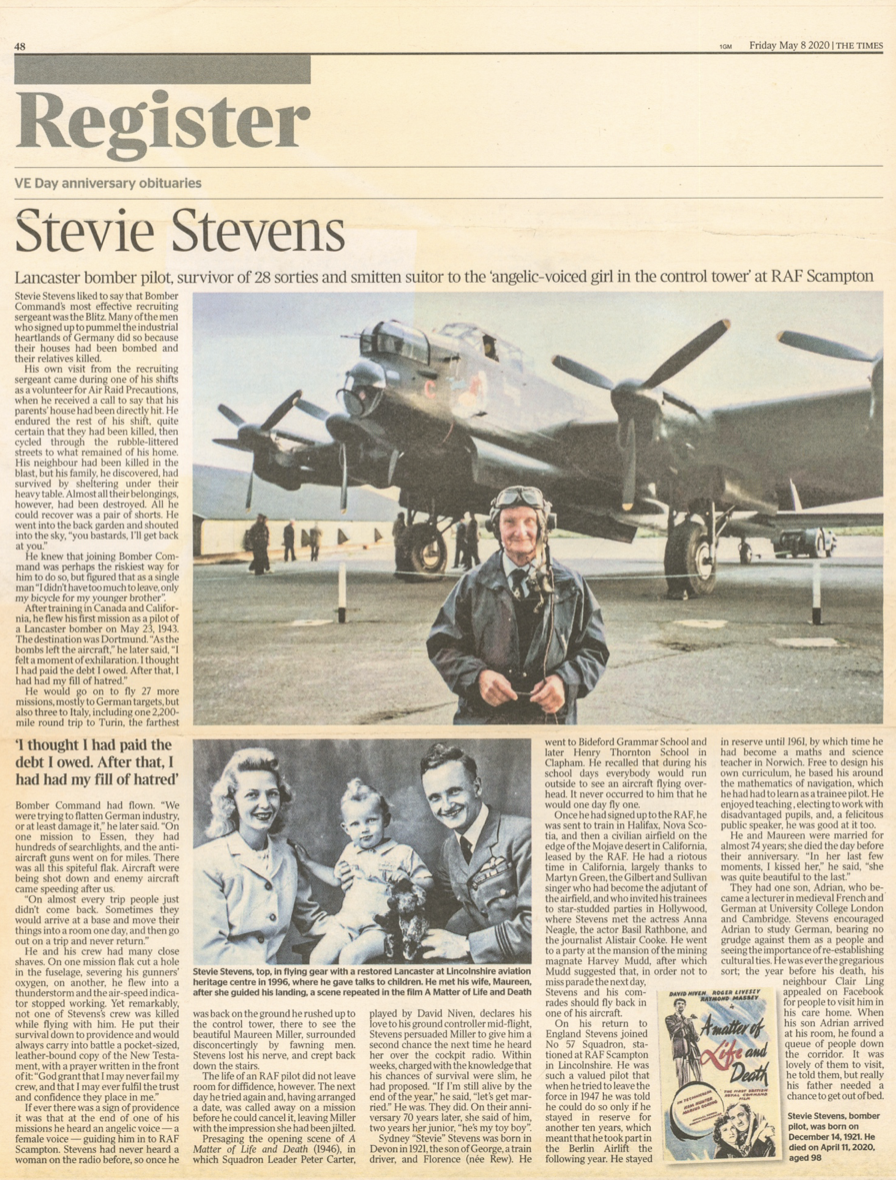
He died in 2020 at the age of 98. Both the BBC and Times paid tribute to his exploits:
https://www.bbc.co.uk/news/av/uk-england-norfolk-49656112
Stevie Stevens: New audience for Norfolk Lancaster bomber pilot
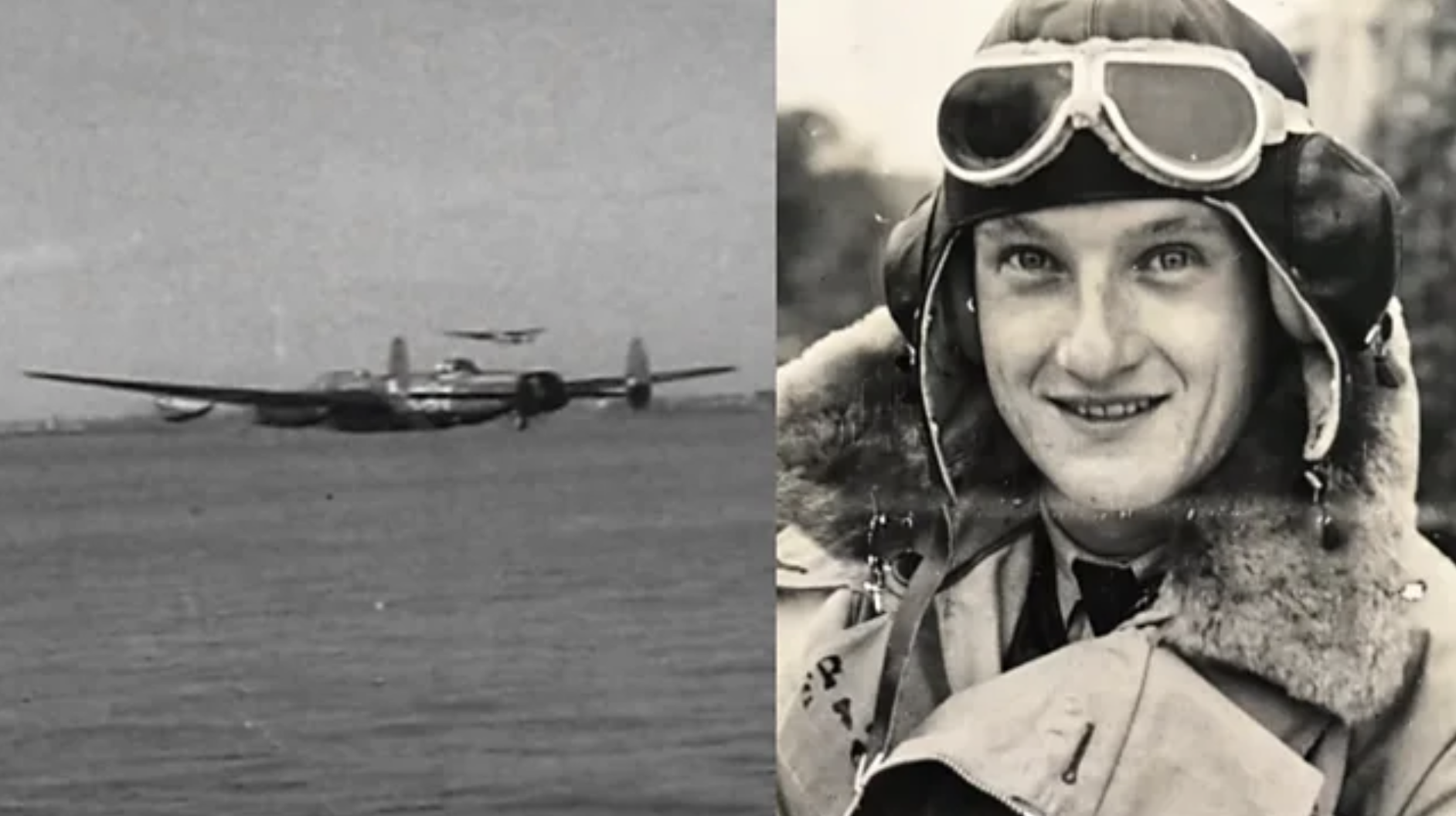
“Tomorrow may never come. The remarkable life story of ‘Stevie’ Stevens, Lancaster pilot and beloved school teacher. 2021. Jonny Cracknell and Adrian Stevens. Published by Wing Leader Ltd, www.wingleader.co.uk £20.”
Wikipedia:
Flight Lieutenant Sidney George “Stevie” Stevens DFC was a decorated RAF World War II Lancaster bomber pilot. He flew 28-31 operations, primarily with 57 Squadron Bomber Command, surviving extraordinary odds when the survival rate for his squadron’s aircrews was as low as one in five.
His notable service highlights include:
- The Distinguished Flying Cross (DFC): Awarded for his determination and immense flying skill. During an October 1943 mission to Leipzig, he pressed on despite violent electrical storms, broken equipment, and a useless airspeed indicator.
- Romance and Service: After the war, Stevie took part in the Berlin Airlift in 1948. His wife, Maureen, was a WAAF radio operator who he originally fell in love with after hearing her guide him back from a bombing mission over Germany.
- Later Life: After retiring from the military, he taught mathematics in Norwich. In 2019, he became an international social media star after a friend launched a successful campaign to ease his loneliness by finding visitors to hear his wartime stories. He passed away in April 2020 at the age of 98.
